The Starting Point
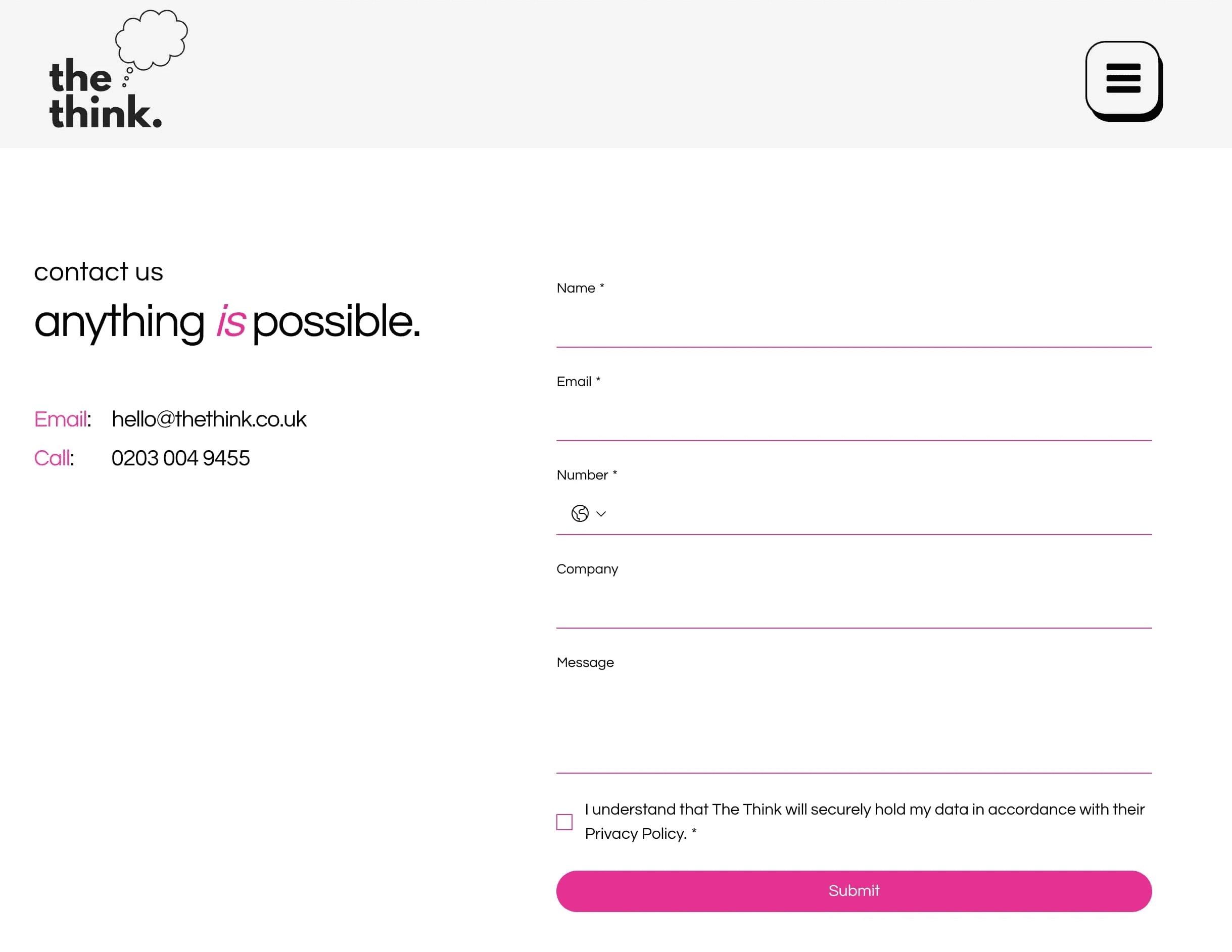
When The Think reached out, the need was specific, but the implications were broader. They needed a multi-step form built into their Framer site, connected cleanly to their email system in Brevo.
On paper, that sounds straightforward. In reality, it’s one of the easiest places for things to break.
Forms that drop data between steps. Submissions that don’t map correctly. Automations that trigger inconsistently. Systems that technically work, but can’t be trusted.
The goal wasn’t just to get a form live.
It was to build something structured, reliable, and clear enough to support real usage without constant oversight.
The Challenge
This project wasn’t about visual design. It was about getting the logic right.
There were a few key challenges:
Building a multi-step experience that feels smooth and intuitive
Ensuring data integrity across steps, without loss or duplication
Structuring submissions so they map cleanly into Brevo
Triggering automations reliably, every time
Avoiding edge cases where flows break silently
Delivering a system the client could actually understand and manage
Individually, each of these is manageable.
Together, they require careful planning. Because once a form is live, small issues compound quickly, missed leads, broken automations, inconsistent data. Problems that aren’t always obvious, but directly impact performance.
The Strategy
Before building anything, I mapped the full flow from start to finish.
Not just the form itself, but everything around it:
What information is collected, and in what order
How fields should be structured and grouped
How that data needs to appear inside Brevo
What happens immediately after submission
The focus was on clarity.
Each step needed to feel intentional. Each field needed a purpose. Each transition needed to be frictionless. At the same time, the backend structure had to mirror that clarity. Because if the data isn’t clean on the backend, the automation layer breaks down quickly.
The Build
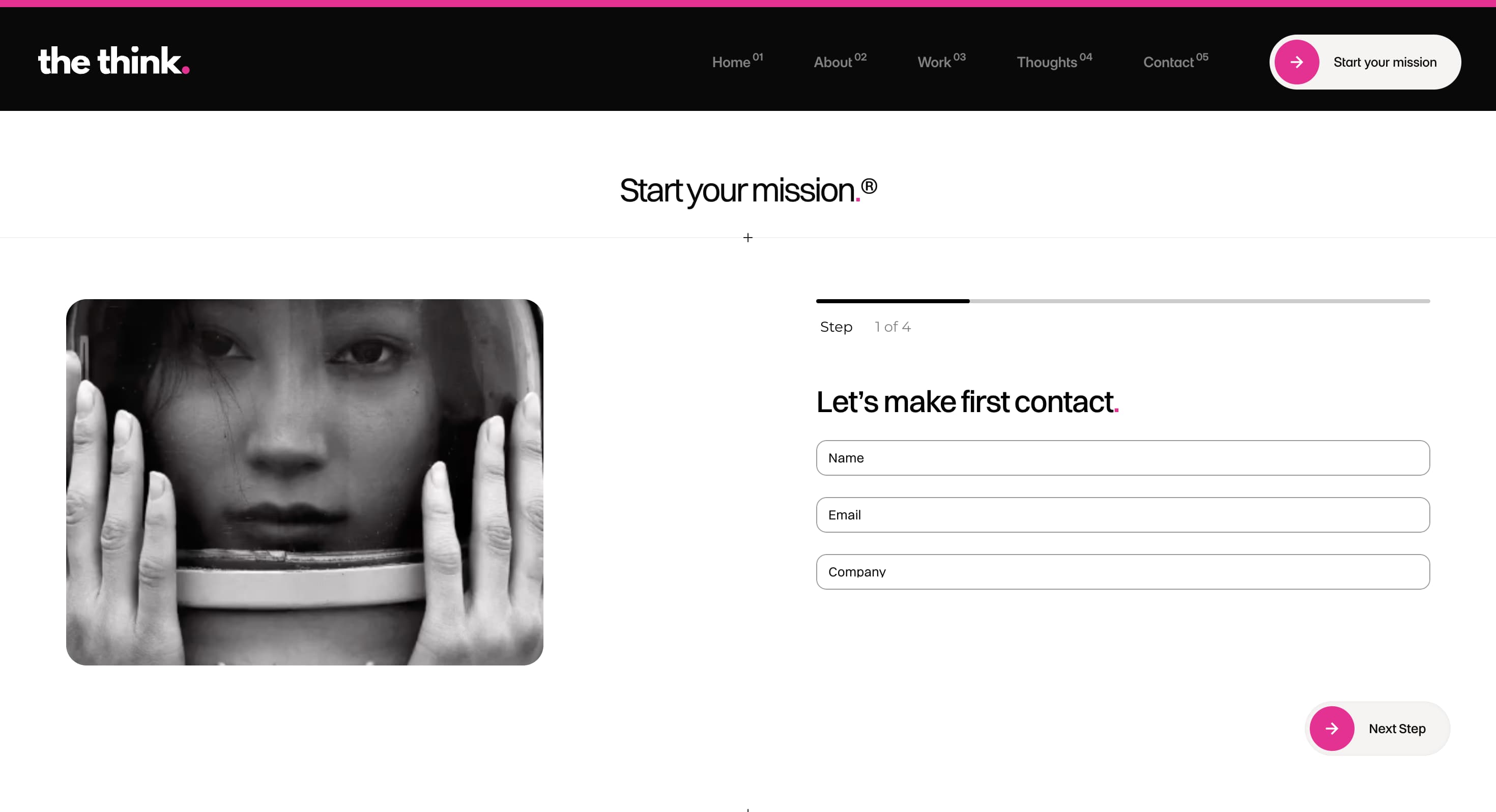
With the structure defined, the form was built inside Framer using a component-based approach.
Each step was designed as part of a controlled system, allowing for:
Clear progression between stages
Logical grouping of inputs
Smooth navigation without reloads or confusion
A structure that can be extended or adjusted later
A key part of the build was state management. Making sure that as users move between steps, their data is preserved accurately. No resets. No lost inputs. No inconsistencies.
This is one of those details that’s easy to overlook, but immediately noticeable when it’s wrong.
The Automation Layer
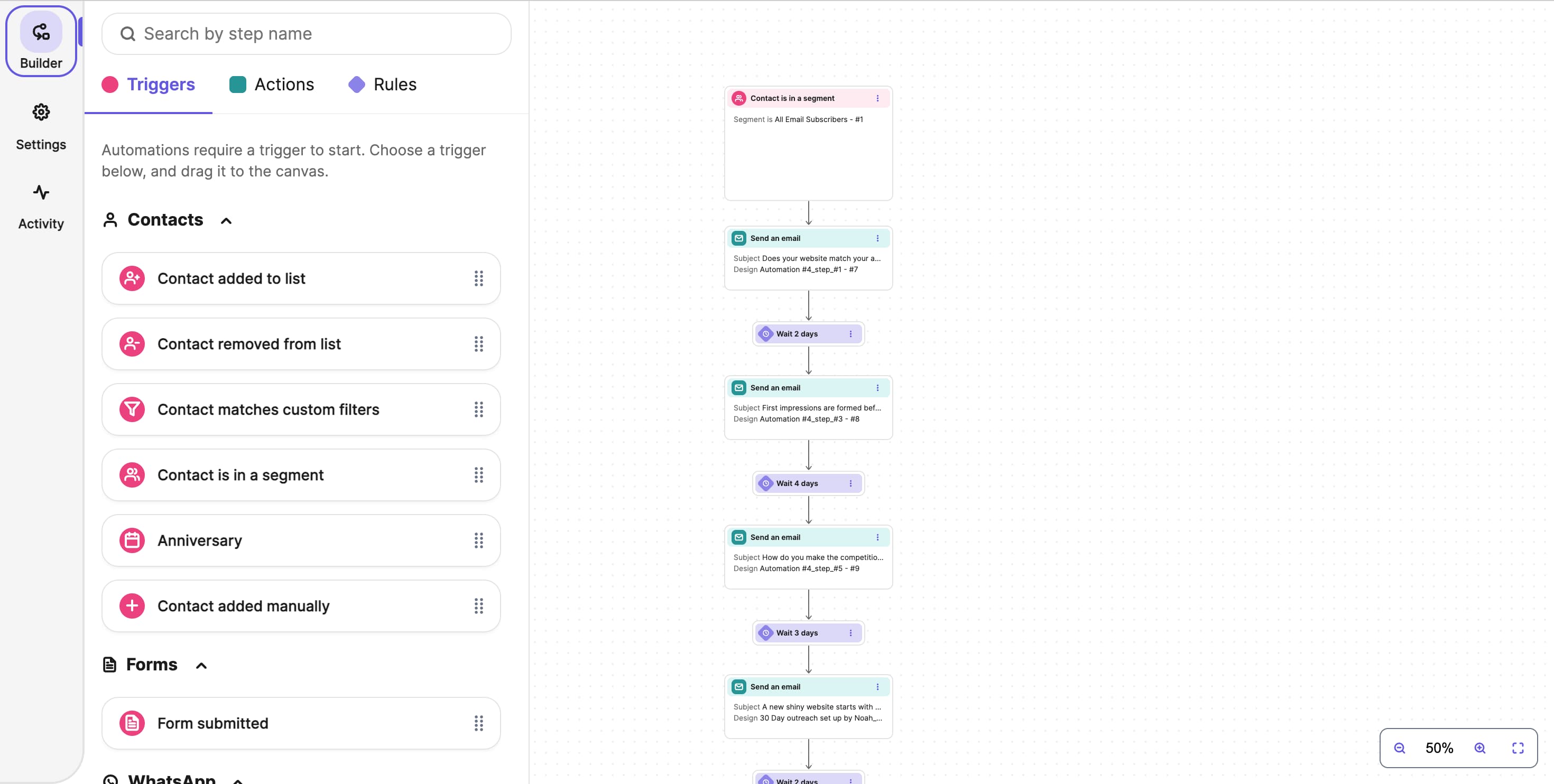
Once the form experience was working as intended, the focus shifted to Brevo. This is where the system becomes valuable. Each form field was mapped carefully to Brevo contact properties, ensuring that:
Data arrives cleanly and consistently
Contacts are segmented correctly
Automations trigger based on accurate inputs
From there, automated email flows were configured to activate on submission. No manual intervention. No gaps between form completion and follow-up.
Just a clean handoff from user action to system response.
Testing & Refinement
A large part of this project was validation. Multi-step forms and automation systems don’t fail loudly. They fail quietly, through edge cases and inconsistencies.
So the testing process focused on:
Running submissions across different paths
Verifying every field inside Brevo
Checking automation triggers and timing
Identifying and removing friction in the UX
Each part of the system was tested not just individually, but as a complete flow. The goal was confidence. Not just functionality.
The Outcome
The final result is a system that works exactly as intended. Users move through a clear, structured form experience. Submissions are captured accurately, without loss or confusion. Data flows directly into Brevo, triggering automation immediately.
And the entire setup is organised in a way that the team can manage and build on moving forward.

The Takeaway
Forms are often treated as small components. In reality, they’re one of the most critical parts of a website. They’re where intent turns into action. Where interest becomes a lead. And when they’re not structured properly, that process breaks down. This project shows what happens when the thinking is clear.
A form that feels simple on the surface, supported by a system underneath that ensures everything works exactly as it should.
Reliable. Structured. Built to scale.