Audit the current website before changing design or URLs.
Build page journeys for homeowners, commercial buyers, or procurement teams as relevant.
Turn project galleries into evidence-rich project pages.
Protect existing organic visibility with a page inventory and redirect map.
Treat launch as the beginning of measurement and iteration.
A website redesign for construction companies should begin with a business case, not a mood board. The new site must communicate the right capabilities, establish trust, make relevant projects easy to evaluate, and help qualified prospects contact the company.
This planning guide helps construction teams decide what to change, what to preserve, and what to measure.
Build the Business Case First
A redesign is justified when it addresses a meaningful constraint such as:
weak or inconsistent lead quality;
an outdated brand that reduces trust;
poor mobile usability;
unclear services or geographic coverage;
slow publishing workflows;
weak search visibility;
an incomplete project portfolio;
a platform that is difficult to maintain.
Write one primary objective and two supporting objectives. For example:
Primary objective: Increase qualified commercial project inquiries.
Supporting objectives: Make sector-specific experience easier to verify and enable the marketing team to publish projects without developer support.
This prevents stakeholders from evaluating the project solely by personal design preferences.
Score the Current Construction Website
Rate each category from 1 to 5.
Category | Audit question | Warning sign |
|---|---|---|
Positioning | Can a visitor identify your work and market quickly? | Generic claims that fit any contractor |
Services | Does each priority service have useful detail? | One short services list |
Project proof | Can prospects find comparable work? | Image gallery without context |
Trust | Are credentials and approved testimonials visible? | Unsupported superlatives |
Mobile UX | Can visitors call or inquire easily? | Tiny controls or long forms |
Search | Can search engines understand pages and locations? | Duplicate or missing titles |
Performance | Does the site load and respond cleanly? | Heavy media and layout shifts |
Management | Can staff update the website reliably? | Every change requires a developer |
Measurement | Are calls and forms tracked? | No conversion baseline |
A low score in several connected categories usually supports a redesign. One isolated problem may require a smaller optimization project.
Design for Real Construction Buyer Journeys
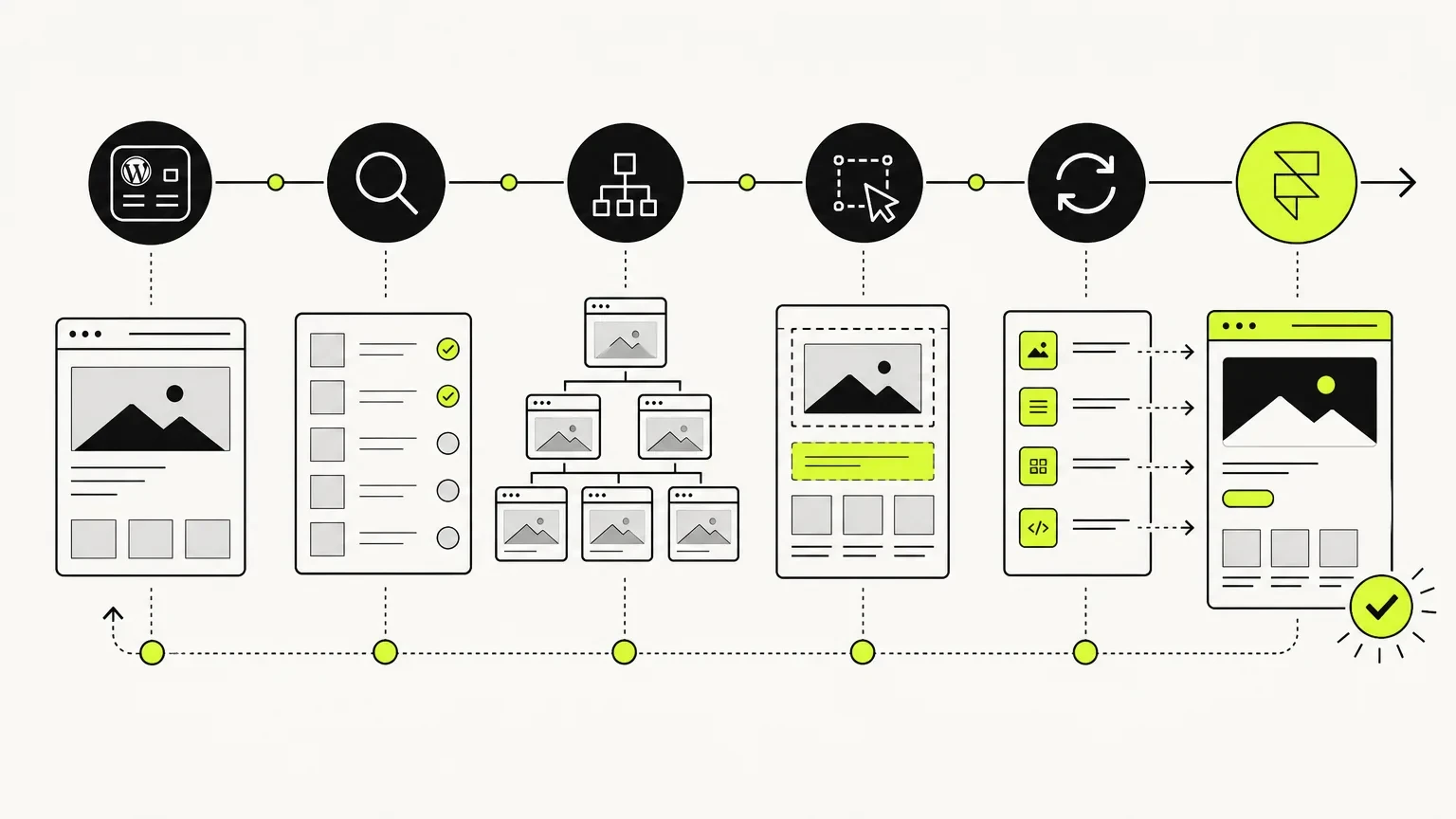
Step-by-step guide showcasing the migration process from WordPress to Framer, tailored for construction companies.
Homeowner or property owner
This visitor may prioritize service area, availability, relevant residential work, reviews, financing information, and a simple estimate request.
Commercial buyer or developer
This visitor may prioritize sectors, capabilities, project scale, delivery approach, leadership, safety, and comparable projects.
Procurement or partner evaluator
This visitor may need licenses, certifications, insurance information, geographic coverage, supplier details, and a direct business-development contact.
Not every construction company serves all three. Remove irrelevant journeys rather than adding pages for appearances.
Create a Proof Inventory
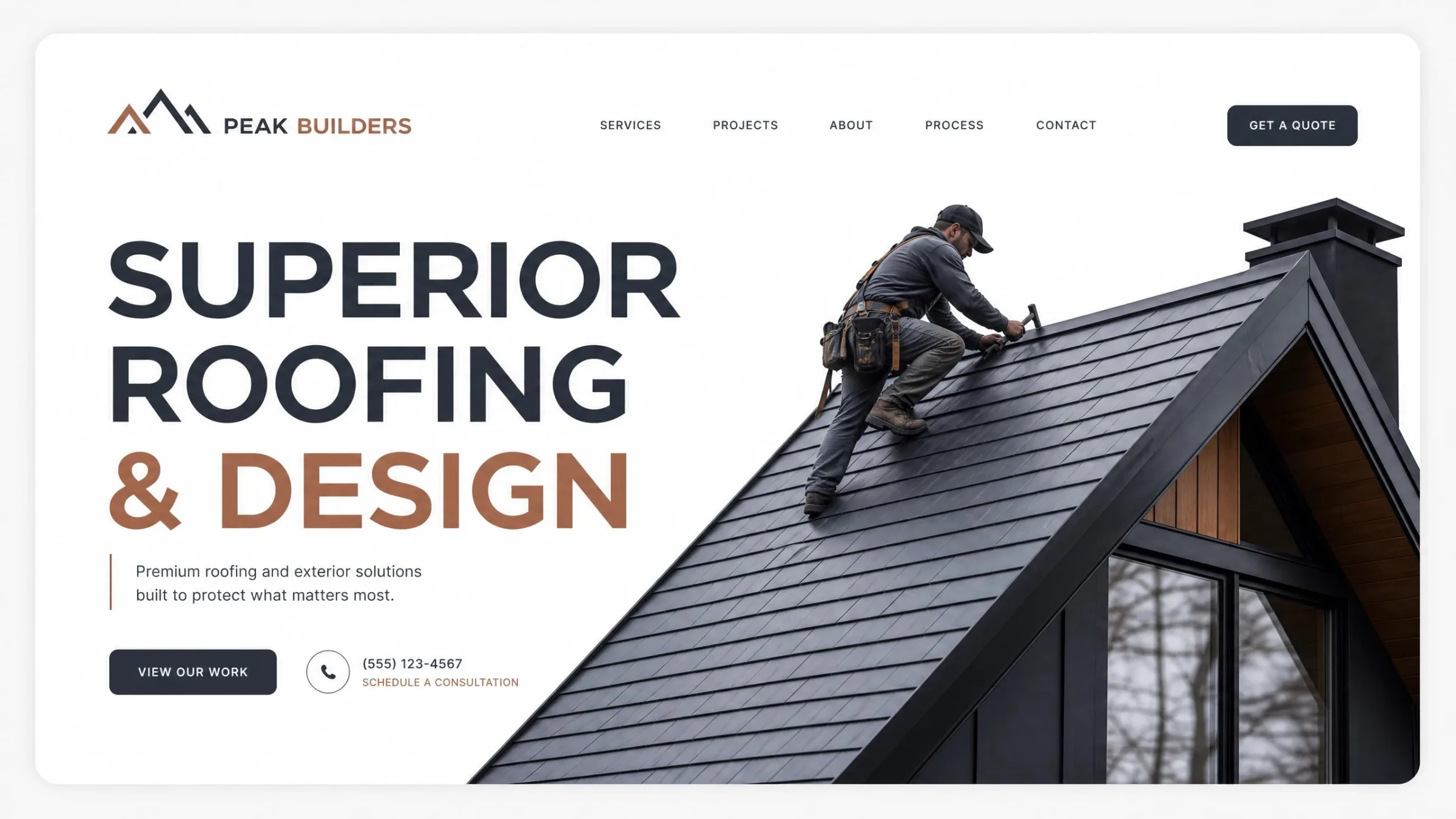
Visual representation of an engaging homepage design for construction companies, focusing on credibility and service offerings.
Before design begins, collect and approve:
project photography and usage rights;
project names and locations;
services delivered;
sectors and project types;
licenses and certifications;
team biographies;
approved testimonials;
associations and awards;
safety or process documentation;
service-area information.
Flag any item that requires client permission. A redesign schedule often slips because proof is discovered too late.
Plan the Core Pages
A construction website commonly needs:
A homepage with clear positioning and representative proof.
Individual pages for priority services.
Project pages organized by useful attributes.
Sector pages when buyer needs materially differ.
An about page with leadership and operating principles.
Credentials or safety information where relevant.
A contact page with clear expectations.
Useful educational content that answers buyer questions.
Our guide to contractor website services provides additional guidance on prioritizing lead-generation work.
Improve Conversion Without Adding Pressure
Construction buyers may not be ready to request a quote during the first visit. Provide actions appropriate to their stage:
Call the company.
Request an estimate or consultation.
Discuss a commercial project.
View related projects.
Review a capability statement.
Check service coverage.
Forms should collect only information needed for routing and qualification. A commercial project form may reasonably request project type, location, schedule, and scope. A simple service request should not feel like a procurement portal.
Protect SEO During the Redesign
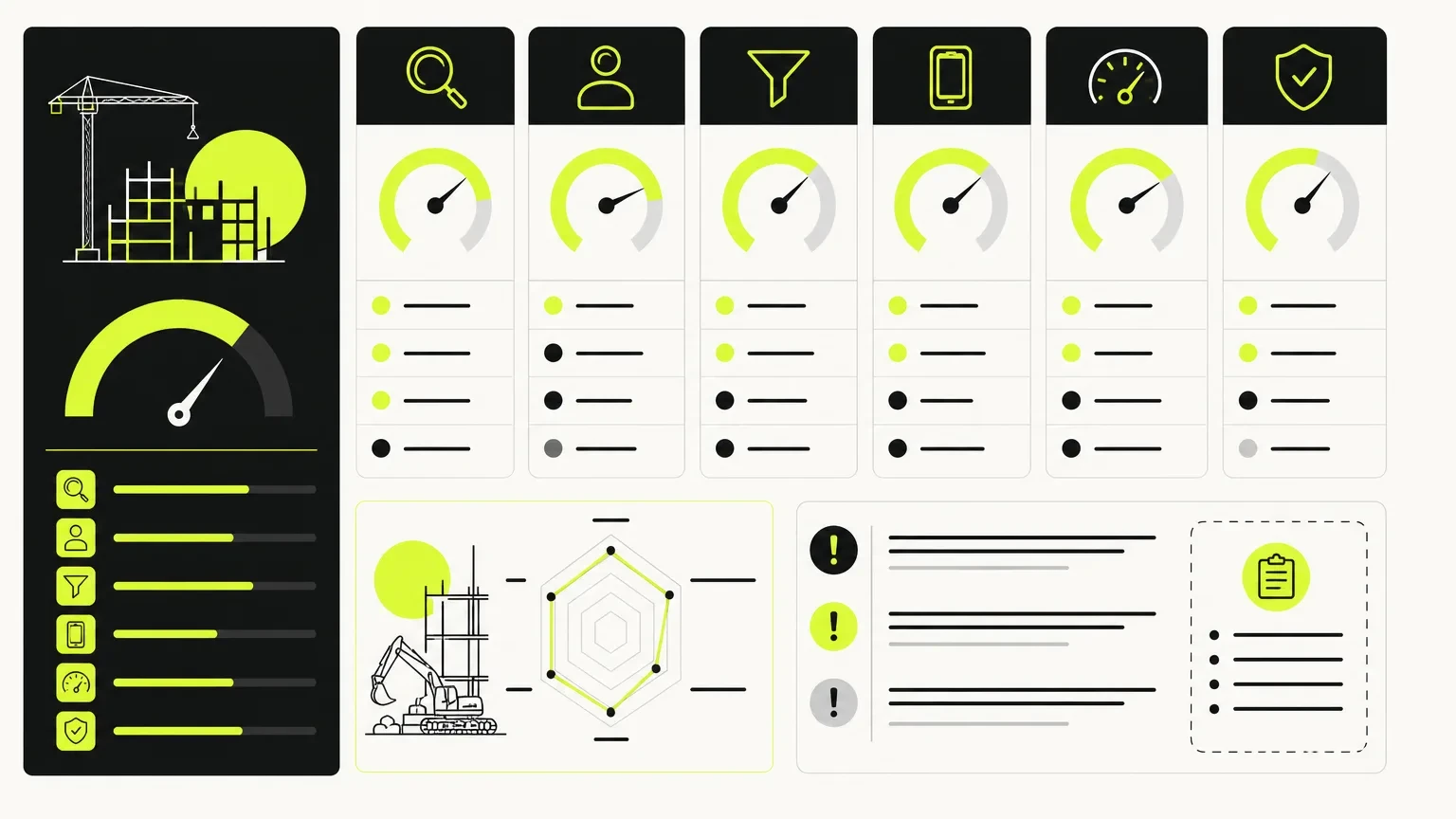
Using an audit scorecard to measure current website performance and identify areas for improvement.
Create a spreadsheet containing every current URL, page title, traffic value, backlinks where known, conversion role, and destination on the new site.
Use these actions:
Keep: The page remains at the same URL.
Improve: The URL remains but content is strengthened.
Merge: Several overlapping pages become one stronger resource.
Redirect: The old URL points to the closest relevant replacement.
Remove: The page has no value and no suitable replacement.
Never redirect every removed page to the homepage. Preserve relevant internal links, headings, metadata, image context, and local information. Test redirects and indexing after launch.
Budget for the Work That Actually Changes Cost
Redesign price is influenced by:
number and complexity of pages;
copywriting and content migration;
project photography preparation;
custom CMS collections;
forms and integrations;
SEO migration requirements;
stakeholder and approval complexity;
accessibility and performance requirements;
post-launch support.
See our website redesign cost guide for a fuller breakdown.
Launch Checklist
Before changing the domain connection, verify:
all approved pages are present;
forms deliver to the correct recipients;
phone and email links work;
redirects are loaded and tested;
metadata is unique and accurate;
analytics events are recording;
mobile navigation and galleries work;
legal and privacy content is current;
the sitemap is accessible;
a rollback owner and monitoring plan exist.
Conclusion
A construction company website redesign succeeds when it helps the right buyer understand the company, verify relevant experience, and take a sensible next step. Strong visuals support that goal, but architecture, proof, content, SEO protection, and measurement make the redesign commercially useful.
We approach website redesign services as an ongoing growth system rather than a one-time visual refresh. Use the audit above to identify whether your constraint requires a complete rebuild or focused improvements.